The gift
One cabinet closed the gap
In December 2025 the Foundation funded Metal Canvas: Where Art Meets Industry. The grant became a Cyclone 4826 blast cabinet and dust collector, installed in February as a permanent station in the Crescent Valley High School metal shop. Before it, students could design a part, cut it on the CNC plasma table, and powder coat it. The surface prep in between, the step every professional fab shop runs, was the one we had no equipment for. Now they run it here.
Equipment record · Metal Canvas
The project
A gift for Bob
Bob is a machinist. He was born in 1943, and he volunteers in our shop, working the lathe alongside students who are sixty-odd years younger than he is. They wanted to make him something.
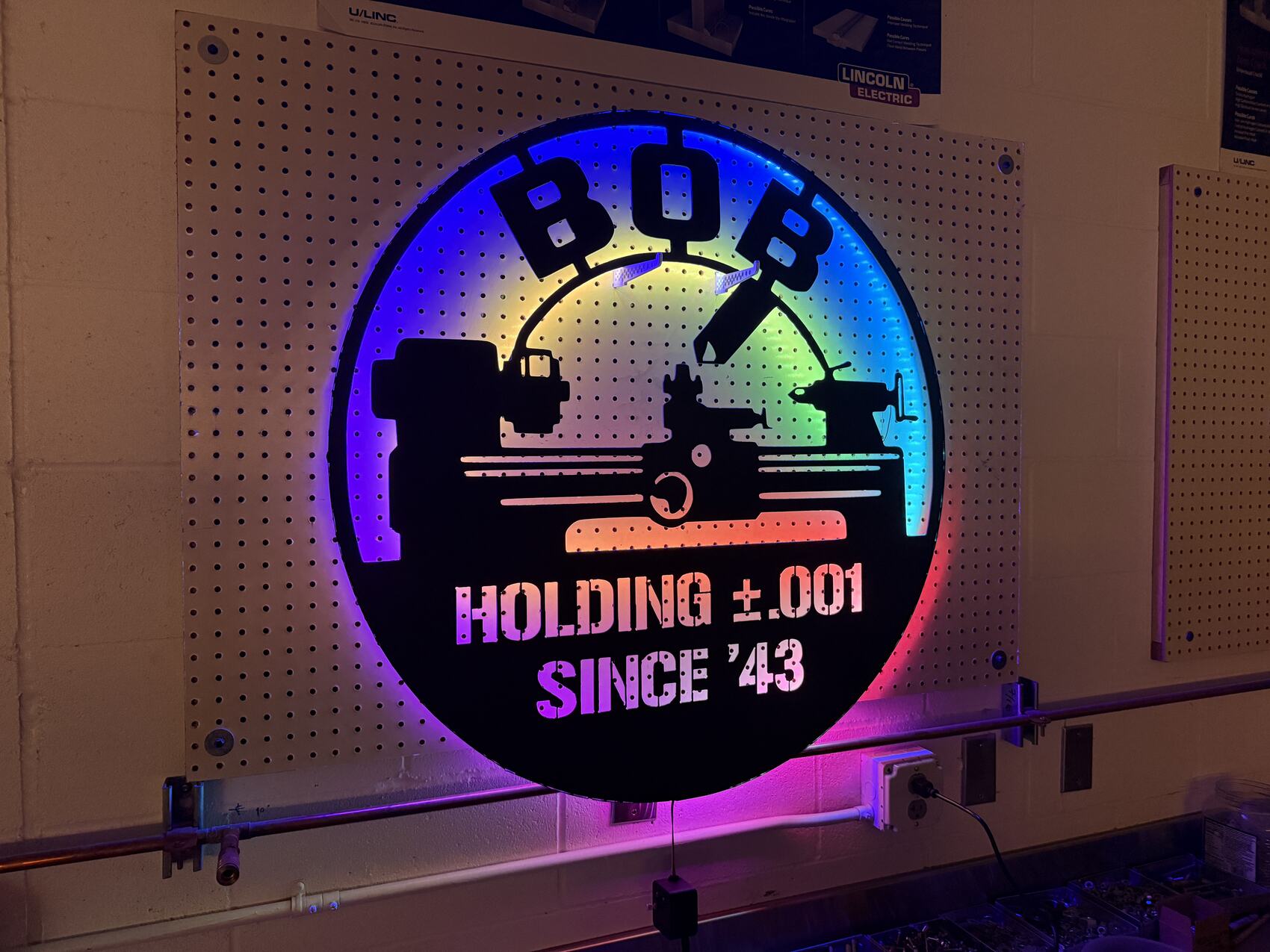
So they designed a sign: his name over a lathe, and under it, HOLDING ±.001 SINCE '43. He has been holding a thousandth of an inch his whole life. It is a tolerance joke and a birthday card at the same time, and it only works if the machining reference lands. Bob got it immediately.
They laid the artwork out with generative AI, then reworked it against constraints the software does not care about: every island needs a bridge or it drops through the table, and every inside corner has to survive the width of the torch. Then they took it to the machines. Here is every step it went through, in order.
One project, every step
Design. Cut. Blast. Coat. Light.
Design
The layout starts as a drawing and ends as a toolpath. Students set the letterforms, the lathe silhouette, and the bridges that hold every loose island in place until the cut is finished.
Cut
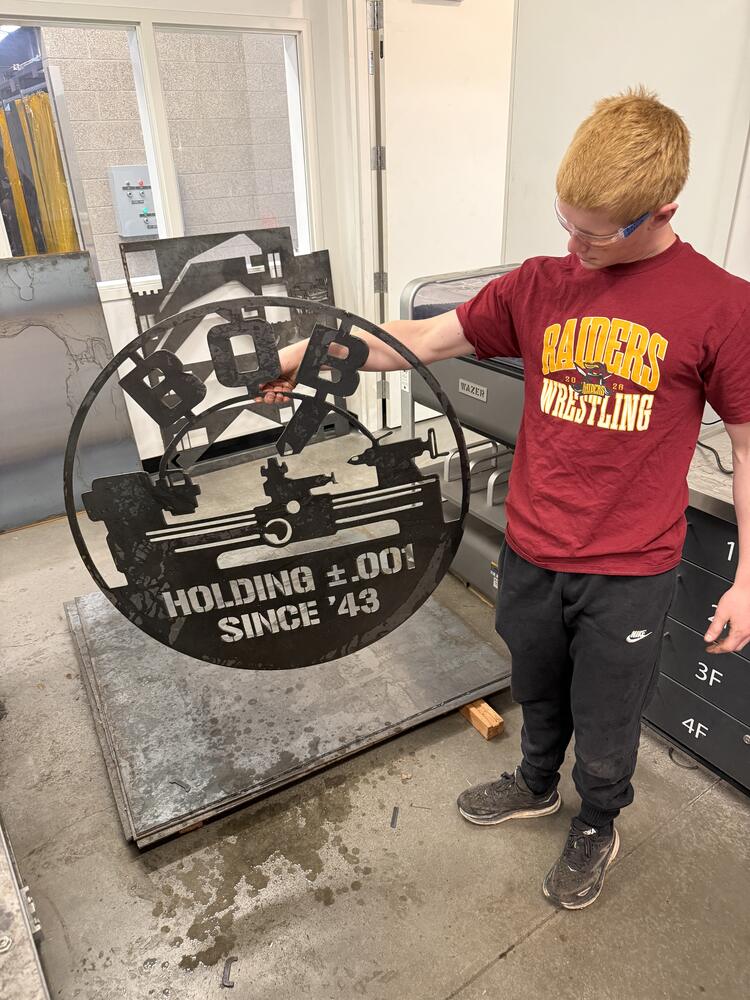
The CNC plasma table turns a sheet of steel into the part. It comes off the table rough: mill scale, dross along the edges, and every torch mark still showing.
Blast
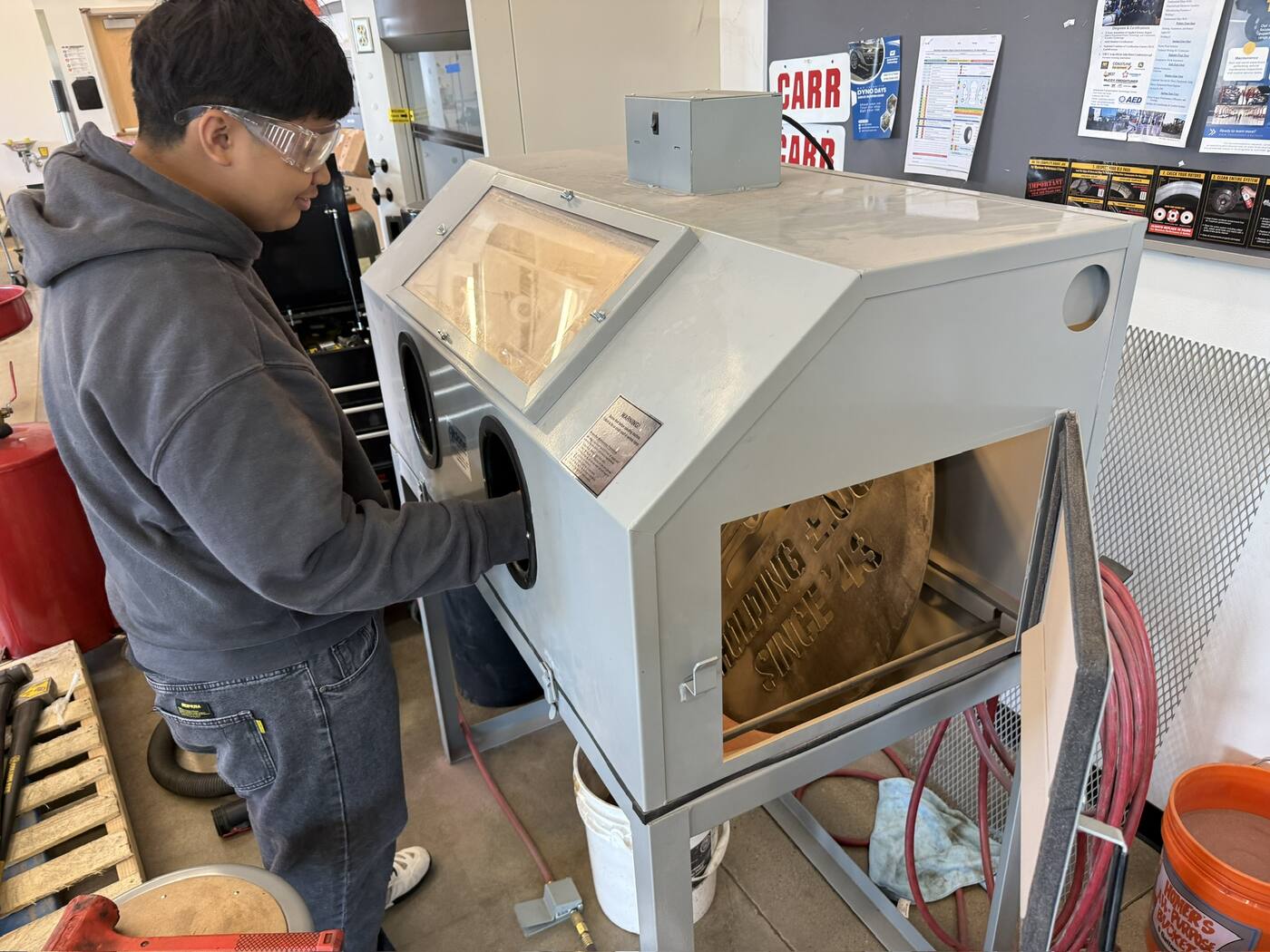
Your grantThe sign goes into the Cyclone cabinet. Scale and dross come off, and the steel comes out clean and uniform, with enough tooth for a coating to actually hold. This is the step the Foundation bought.
Before February, there was no way to do this on site. The part would have gone to powder coat with scale still on it, and no coating holds for long over scale.
Coat
Powder coat, then cured in the shop oven. It came out flat, black, and even, because the surface underneath it was prepped right. You cannot fix a bad surface at the coating stage.
Light
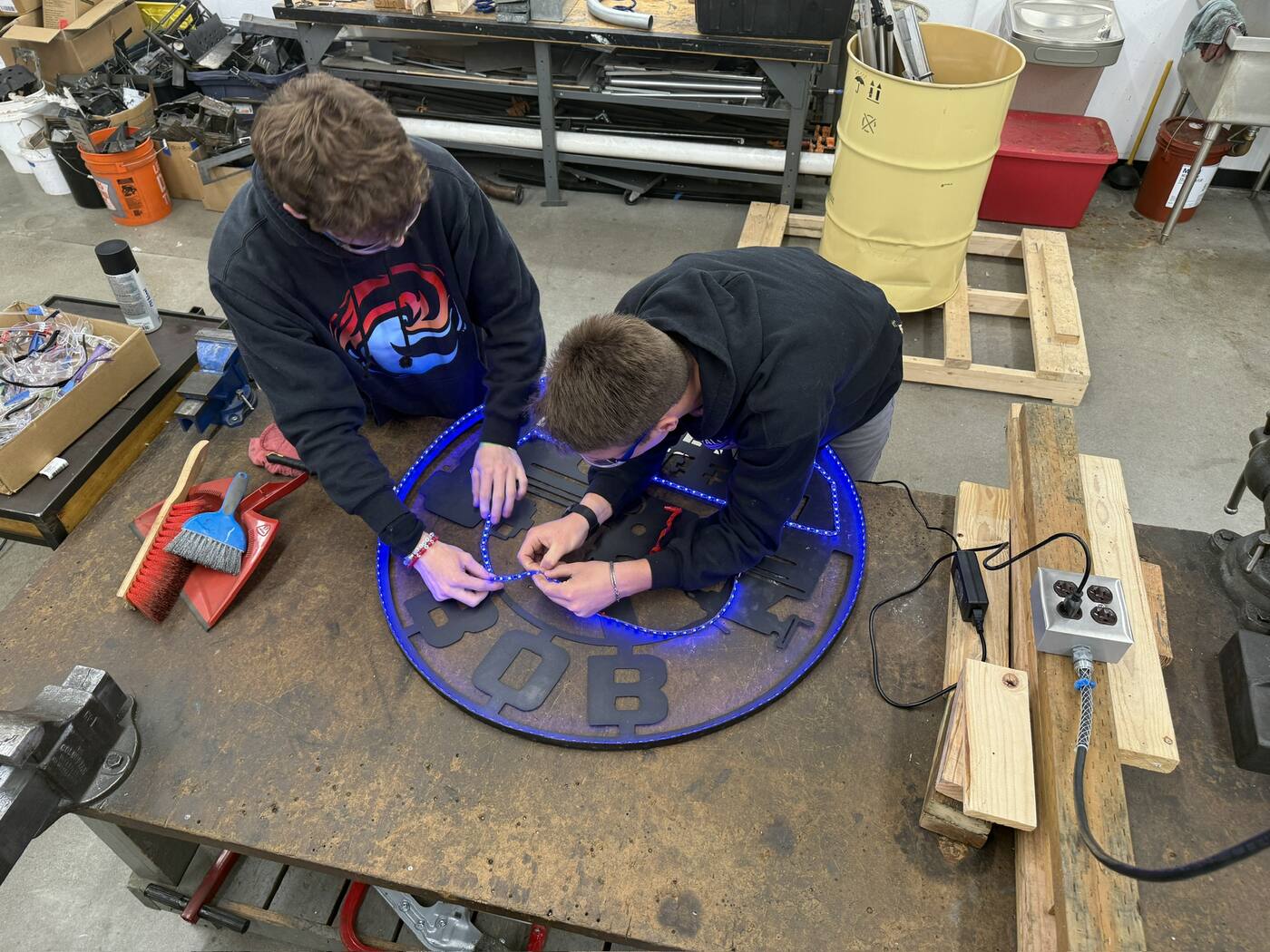
Students soldered an addressable LED strip to the back of the sign, wired it to an Arduino, and programmed the color. By the last step the project had turned into two projects: a piece of fabricated steel and a small electronics build, finished by the same students on the same bench.
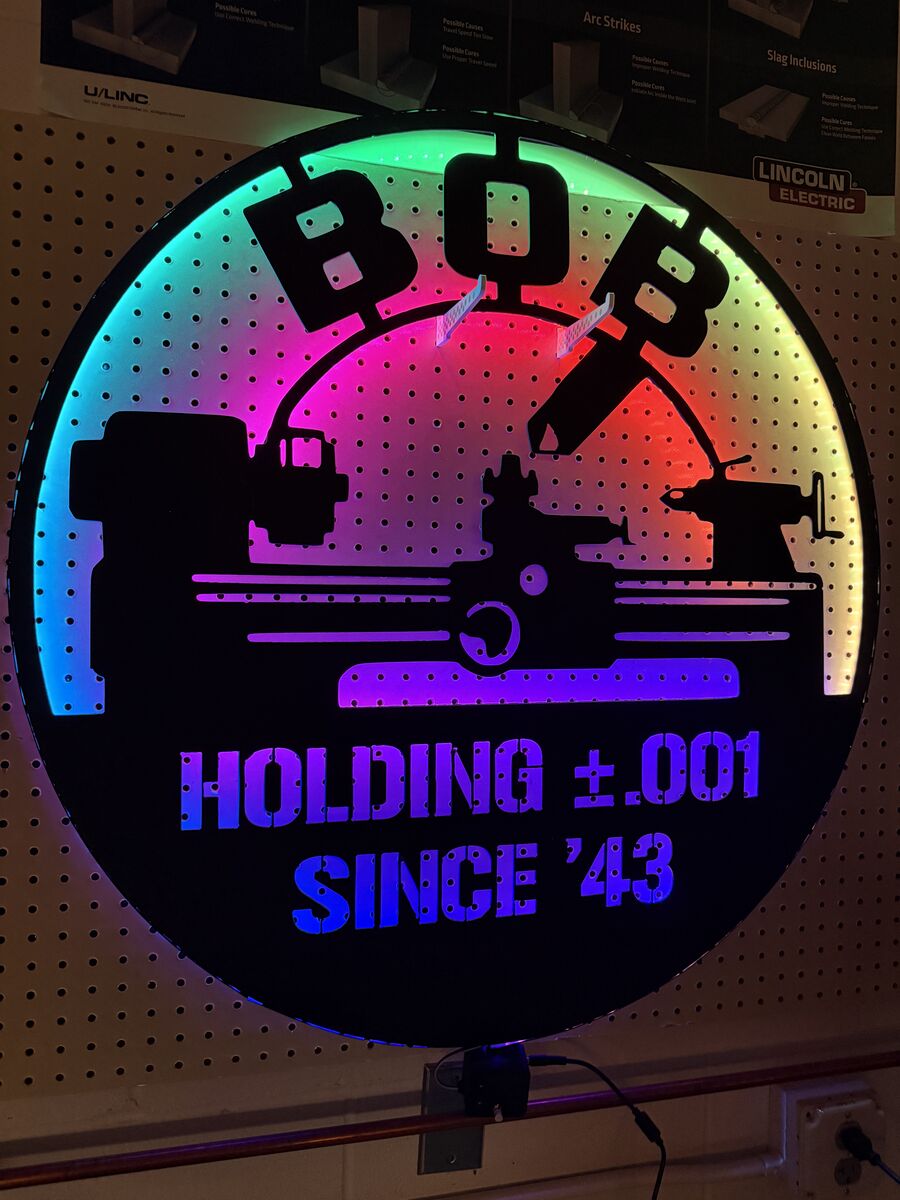
It hangs in the shop now, and it did not stay decorative. When a job gets past what the students can solve, somebody switches it on. That is the signal that the expert is needed, and Bob comes to the lathe.
What changed
The difference between a school project and a product somebody would pay for is the finish. The Entrepreneur Challenge teaches that end to end: students design a product, build it, cost it out, and take it to market, which is the part of manufacturing a classroom usually cannot reach. Pieces that used to leave this shop with mill scale and torch marks now leave blasted, coated, and finished to a standard the students set themselves. About fifty a year will run that step on this cabinet, and they know what it does because they have seen the before and the after on their own work.
The district builds the program and keeps it staffed. The Foundation closed the gap in the middle of it.
Beyond one sign
What else runs through it
The cabinet is not reserved for one assignment. Anything that gets a coating goes through it, and the shop turns out a wide range of work: fabricated and welded pieces, precision machining to a print, and tools students design from scratch.
-
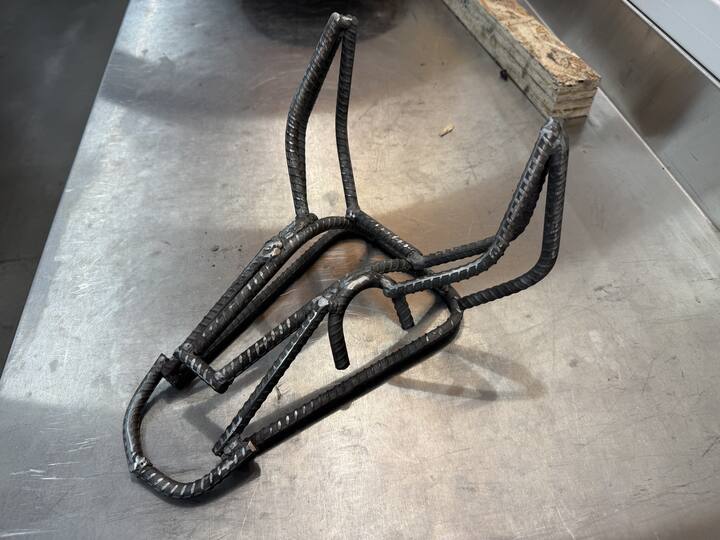
Welded sculptureRebar · hand bent · welded -
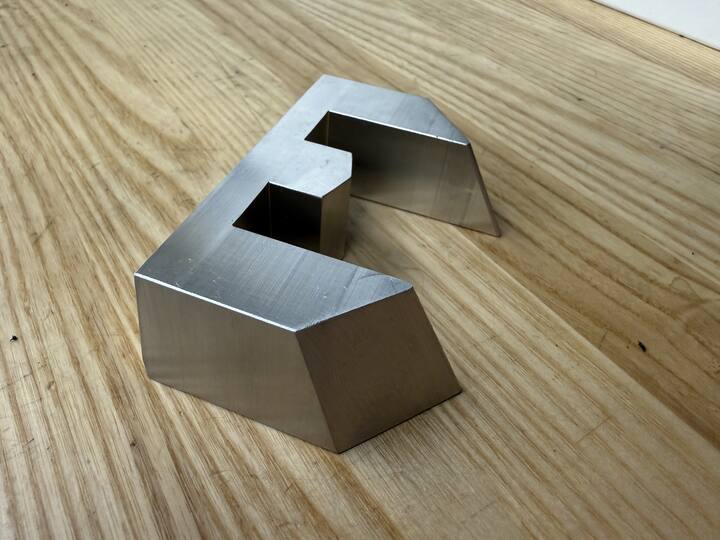
Machining exerciseAluminum · milled to print -
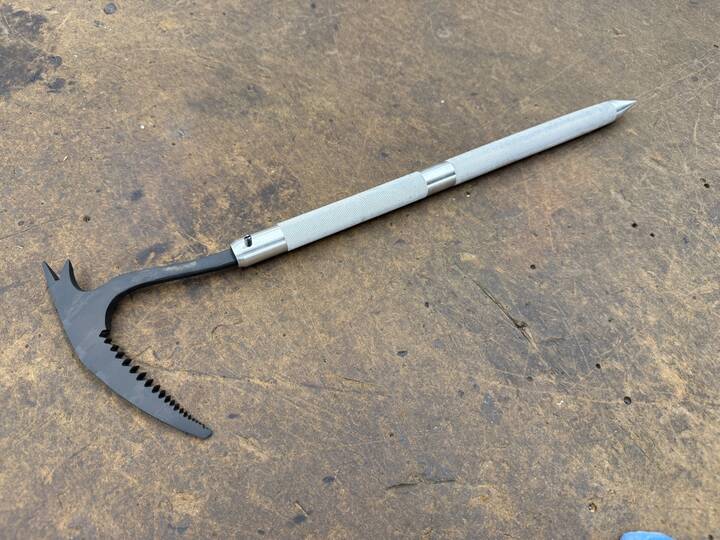
Student-designed toolTurned · knurled · blackened
From the shop
Thank you
You bought one machine, and it connected the whole line. Design, cut, blast, coat, light: students run every one of those steps here now, on work they keep or sell. A year ago the middle of that line did not exist here.
And the first thing they built with the complete pipeline was not for a grade and not for a sale. It was a gift for the machinist who volunteers his time in our shop. We are grateful, and the shop runs better because you decided it should.